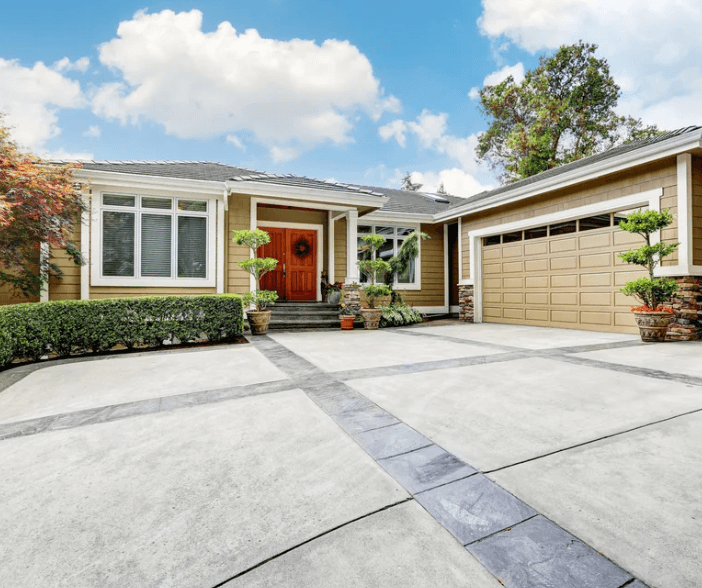
Concrete Driveways Built to Handle Daily Traffic
Poured, reinforced, and finished for decades of use in Middle Tennessee's freeze-thaw swings.
A driveway takes more abuse than almost any other surface on your property: vehicle weight, temperature swings, and constant exposure to the elements. We build driveways on a properly compacted gravel base with reinforcement and correctly spaced control joints so the slab moves the way it's supposed to instead of cracking randomly.
Whether you're pouring a new driveway, widening an existing one, or replacing a cracked and settling slab, we grade for drainage first — standing water is the number one cause of premature driveway failure.
What You Get
Reinforced for vehicle loads
Steel or fiber reinforcement sized to the slab thickness and expected traffic.
Drainage-first grading
Proper slope away from the garage and foundation to keep water moving.
Control joints placed correctly
Joints cut at the right spacing and depth to direct cracking where it won't show.
Built for clay soil and freeze-thaw
Base prep accounts for Middle Tennessee's soil conditions and winter temperature swings.
Our Process
- 1
Site evaluation & grading plan
We assess soil, existing drainage, and access before quoting.
- 2
Excavation & base prep
Old material removed, gravel base compacted to spec.
- 3
Forming & reinforcement
Forms set to grade; steel or fiber reinforcement placed.
- 4
Pour, finish & cure
Concrete poured, finished to the chosen texture, and cured properly before use.
Recent Work
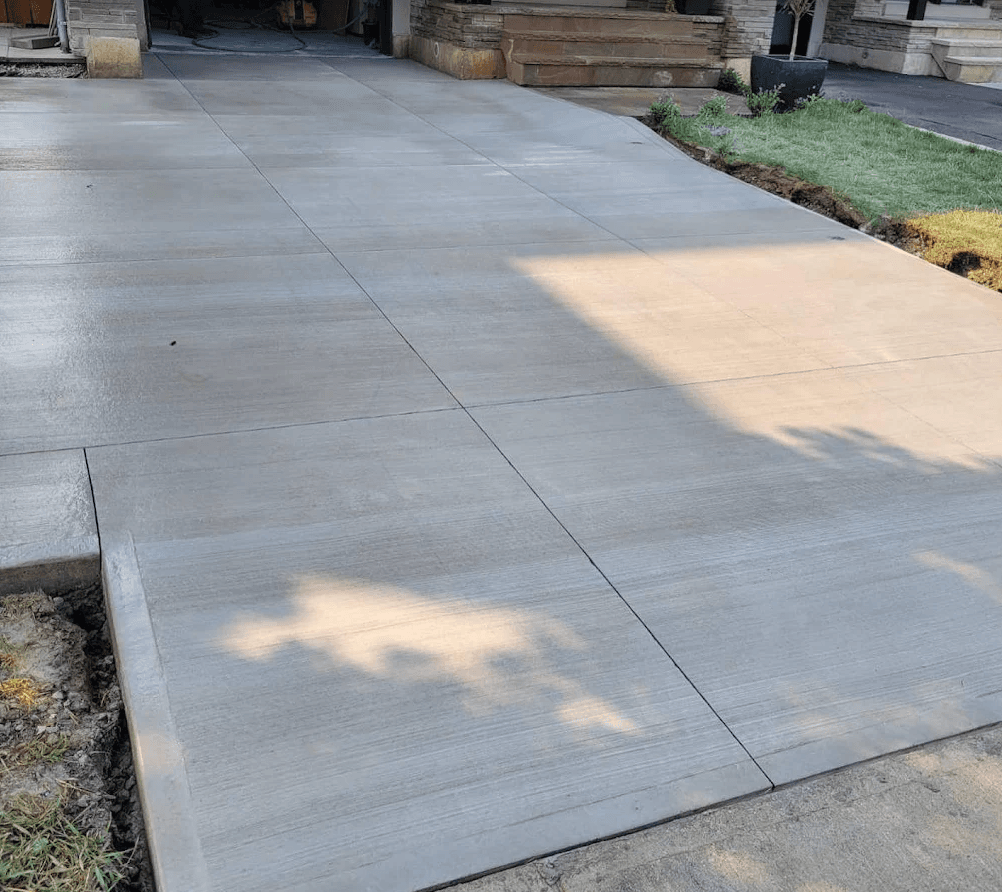
Concrete Driveways Near You
Frequently Asked Questions
How thick should a concrete driveway be?
Standard residential driveways are typically poured 4 inches thick, with 5-6 inches recommended for heavier vehicles like RVs or trucks. We'll recommend thickness based on your specific use.
How long before I can drive on a new driveway?
Concrete is generally safe for foot traffic after 24-48 hours, but we recommend waiting 7 days before driving on it and a full 28 days before parking heavy loads on it.
Can you replace only part of my driveway?
Yes. We can saw-cut and replace damaged sections while matching the existing grade and joint pattern where practical.
Ready to Start Your Concrete Project?
Get a straightforward quote from a local Middle Tennessee concrete crew.